
How did MTa Learning’s Founder Martin Thompson learn to facilitate effectively?
Read on to find out, as Martin shares his thoughts on the best way of developing facilitation skills…
If you’d like to improve your facilitation skills, it’s a good idea to start by answering these questions:
+ What qualities do you need to possess to become a better facilitator?
+ What do you need to know?
+ What do you need to be able to do?
+ What sort of experience should you have?
+ What will be your rewards?
Facilitate learning
These are all important questions, but questions that I didn’t consider consciously as I began to develop my personal facilitation skills. Times changed for me when I had to start developing others as facilitators: I had to be able to answer these questions, and, from a personal point of view, what was it about me that enabled me to facilitate learning? I was becoming widely recognised as very able, but how did I do it?
An informal process
To find out I cast my mind back over I how I learned to facilitate. My learning was an informal process which didn’t involve a formal training programme, workshops or extensive reading but it did involve a lot of ‘sitting with Nellie’ (watching others) trial, error (and importantly some success) and reflection. Looking back it is apparent that the process was far more complex than it appeared at first glance.
Learning potential
Almost all of the facilitating I did during my first 20 years was done in pairs, i.e 2 co-facilitators working together with one group of typically 8 – 12 people. I worked with co-facilitators with varied backgrounds, attitudes, approaches, experiences and skills so the learning potential was rich.
What’s in it for me?
The key benefits for me (as opposed to the participants) were:
+ I always had a ‘friend’ in the room who was always observing from a slightly different stand point
+ my co-facilitator could encourage silently or intervene in tricky situations
+ we could raise / discuss progress, issues, options, incidents, people, options, revise approaches and plans at every break
+ I could observe my co-facilitators actions and the responses generated, with me remaining a passive observer or getting involved as appropriate
+ we could run comprehensive learning reviews of our performance after each event and monitor our progress in subsequent events
+ the diversity of different co-facilitators inputs into both the workshops and our 1:1 discussions
+ giving and receiving from each other very open and honest personal feedback was part of daily work
Experiential learning
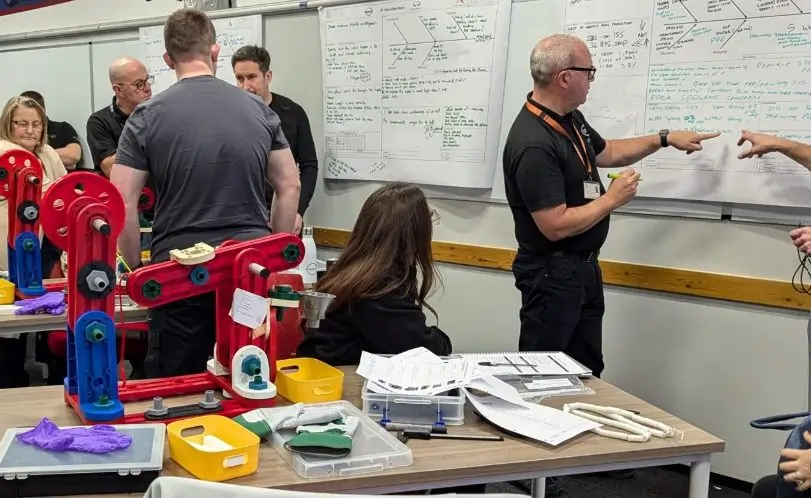
In summary, I learned to facilitate through extensive and intensive experiential learning. My conclusion being that experiential learning is a great way to learn how to facilitate.
So how can I become a more effective facilitator?
1. Find opportunities to facilitate with a co-facilitator and use each other as a source of learning.
2. If you can’t work with a co-facilitator for whatever reason, find someone who is prepared to be open and honest with you to sit and observe you and then discuss your facilitation / act as a sounding board afterwards.
3. If you can’t do this either, video your performance and review that critically, ideally with someone who can help you develop your understanding.
Martin Thompson
For more tips on facilitating read the rest of our expert guide series of articles. If you have any more questions about facilitating or experiential learning, please get in touch, we’re always happy to talk.